
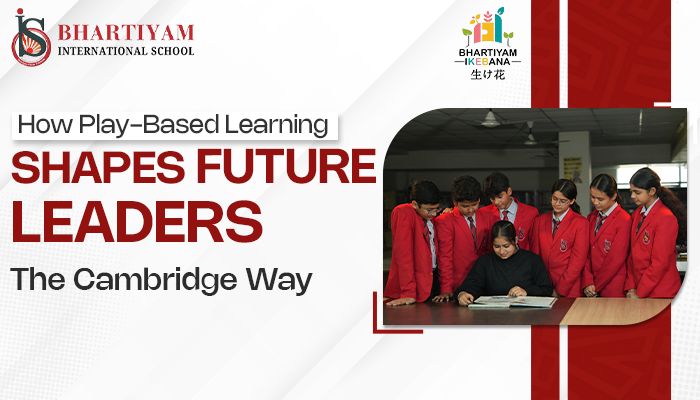
In the present era of education, many parents are way too concerned about their child growing up in a stress-filled environment. To tackle this concern, the Cambridge Early Years Programme stands up for students and offers them a play-based learning approach. Learning through such an approach not only makes the youngsters grow up in a stress-free environment but also promises zero compromise on their necessary early education.
What Does a Play-Based Learning Approach Include?
When you, as a grown-up, hear the term “play-based learning,” a picture of tons of kids playing and smiling together comes to your mind. This imagination of yours is correct, as this is how students learn in the best way possible when they become a part of the Cambridge Early Years Programme. The following are some highly acclaimed methods and their inclusions, followed by teachers to fulfill their vision of holistic child development with fun and exciting activities:
1. Structured Play
The guided (structured) play methods help children in growing their thinking, teaching them about collaborative efforts as well as leadership in different situations. Activities like these ensure that they strengthen the cognitive skills of children, provide them with early literacy, teach them about numeracy, and also hone their problem-solving abilities. Structured play includes activities such as:
- Sorting shapes
- Basic math games
- Language- and numeracy-based fun tasks
2. Inclusion of Playing Materials
There is no play-based learning method that can work without the use of playing materials. In a typical Cambridge classroom for young students, children are provided with a rich learning environment especially designed for them to grow their innovation and observation, as well as their willingness to experiment. Out of the tons of playing materials available, students get to experience learning with:
- Building blocks, puzzles, and LEGO sets
- Art and craft supplies
- Natural materials like sand, clay, water, and other such props
3. Sensory Play
Among the many methods of play-based learning for children, one approach is the sensory play approach. As the name suggests, these activities teach students about their basic senses as well as elevate those senses like touch, sight, smell, taste, hearing, etc. Additionally, a sensory play approach improves their sense of balance as well as awareness of their own body. Here are some ways in which sensory skills help:
- Enhances Fine and gross motor skills
- Improves self-regulation
- Leads to a growth in their confidence
- Makes them aware of their surrounding
4. Dramatic or Pretend Play
A dramatic or pretend play approach is one of the most important and relevant parts of the curriculum of the Cambridge Early Years Programme. As the term suggests, students engage in dramatic activities, making them enact a role like a doctor, teacher, or anything else. Such an approach teaches them about that respective role, as well as leading to growth in their communication and interactive skills. The play scenarios here help in:
- Developing communication and negotiation skills
- Growing empathy and perspective-taking
- Prepares them for decision-making
- Increases their confidence in social settings
5. Language-Rich Activities
Among the several types of playful learning activities, there are many that focus on the linguistic development of children. These activities include storytelling and rhyme sessions held for the students along with sound- or conversation-based games. Activities rich in their focus on languages help students to grow their foundational qualities, such as:
- Vocabulary
- Communication skills
- Listening and comprehension skills
What are the Benefits of Play-Based Learning?
Play-based learning is certainly the new choice for the old-generation parents to make their young-generation children follow. However, it is important for you as a parent to know exactly how or in which areas your child grows and is prepared for their future. The following are some areas of development that would be clearly visible when your child gets to experience the play-based learning approach in a Cambridge Early Years Programme:
1. Development of Social Skills
The development of social skills is the best for a human to grow at any stage of life. Hence, the sooner a person blends these social skills, like communication, interaction, cooperation, and patience, the better it is for their future. In a nurturing environment like what is provided during play-based learning methods, these social skills are developed when children learn how to:
- Share, take turns, and collaborate
- Resolve conflicts
- Understand varying viewpoints
- Work in teams or groups
2. Enhances Academic Performance
Aside from skill development, what stands as a high priority for parents every time is the academic performance of their child. In case you are concerned about the same, the tons of playing is not separate from the academic learning of students in any way. Cambridge-aligned play experiences support the students in several parts of their theoretical studies, such as:
- Numeracy through counting games
- Linguistic literacy by learning and reading stories and rhymes
- Appropriate logical reasoning through puzzles and problem-solving tasks
3. Emotional Development
Several playing activities are designed specifically to teach students about the basic human emotions and how they can be managed. Among the most followed procedures, this learning occurs during group tasks and pretend play. This emotional development is necessary for students as they include:
- Empathy
- Patience
- Confidence
- Resistance
- Self-expression
4. Physical Growth
The growth of your child’s outer body, i.e., their physical body, is as important as their inner development. The physical growth of a child at such a young age should involve being aware of the body, including their movement, senses, awareness of their surroundings, and much more. The following are some exemplary qualities developed and honed during play-based learning methods that increase the physical growth of a child overall:
- Fine motor skills
- Gross motor skills
- Coordination of body parts
- Agility
- Balance
5. Encourages Creativity
If your child stands in a queue of unique talents with a generic mindset, then the queue is never going to end for them. Hence, creativity and innovation are important skills to be developed at an early age to elevate uniqueness in them. To encourage creativity and innovation among students, students get to experience:
- Creating stories
- Building imaginative structures
- Thinking of original solutions to any problem
- Use playing material in innovative ways
Conclusion
A play-based learning approach is a very modern concept for parents who have seen or experienced a traditional approach to learning for countless years and decades. However, this modern concept needs to be embraced for the betterment of the future generation to turn them into great humans that the world can look up to. This is what the Cambridge Early Years Programme provides the youngsters.
Even though these claims may feel big for children who are just 3 to 6 years old, keep in mind that the path to becoming great does require an early step. We at Bhartiyam International School help you take that step.
At Bhartiyam International School, we offer admission to the Cambridge Early Years Programme to young children and provide them with an equal amount of playful activities as well as theoretical sessions. Such an approach prepares students in every subject and the skills necessary.
Enroll your child in the Cambridge Early Years Programme at Bhartiyam International School and see an example of greatness growing right in front of your eyes.
Frequently Asked Questions (FAQs)
Q. What is play-based learning in the early years?
Play-based learning is an approach taken by schools and students for children to learn and develop the skills and knowledge they require through structured and unstructured playful methods.
Q. What are the 5 elements of play-based learning?
The five key elements of play-based learning are self-chosen, enjoyable, unstructured, process-oriented, and imaginative.
Q. What is an example of a play-based approach in early childhood?
A simple example of a child experiencing development through a play-based approach is building blocks, solving tough puzzles, and engaging in art & craft.