
Emotional intelligence, or as Gen-Z likes to call it—“EQ,” is vital in today’s time more than ever. Everyone—from partners to employers—is prioritising emotionally strong individuals. Because it helps in coping with the world’s fast pace, competition, screen exposure, and pressures. All of these reasons increase the importance of introducing emotional intelligence in education. As we’ll see later in the blog, strong emotional skills are positively correlated with several outcomes, including social relations, academic achievement, negotiation skills, workplace social dynamics, positive perceptions by others, and health and well-being. Let’s explore why EQ matters so much in today’s classrooms and how it helps children thrive.
What is Emotional Intelligence in Education?
At its core, emotional intelligence (EI/EQ) is a person’s ability to perceive, use, understand, manage, and handle emotions. High emotional intelligence goes beyond just self-recognition. It is about using emotional information to guide thinking and behaviour, drawing and labelling the differentiating lines between emotions, and adjusting them to adapt to environments. This complete practice is what makes emotional literacy or social-emotional learning (SEL).
Social-emotional learning for students is a structured approach that teaches children the emotional and social skills they need to navigate daily life. SEL usually focuses on five key areas:
- Self-awareness
- Self-management
- Social awareness
- Relationship skills
- Responsible decision-making
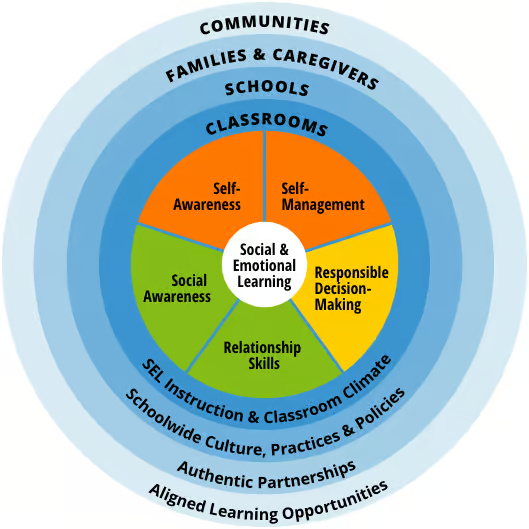
These skills are not a product of a single class. Like the picture highlights, they’re built gently, through conversations, activities, teamwork, and daily classroom interactions.
Importance of EQ in Classrooms
Problems faced by children today aren’t the same as those faced by children a generation ago. Today, they have to deal with rising competition, social media pressure, rapid technology shifts, and greater academic expectations. It now necessitates stronger emotional abilities than ever.
- It reduces bullying
The rise in negative emotions amongst children leads to bullying, an abusive peer interaction involving aggression, harassment, and violence. High emotional intelligence has been shown to reduce bullying behaviour (both as the oppressor and the oppressed), and is considered a potential method for bullying prevention and intervention initiatives.
- The future workforce needs EQ as much as IQ
EQ and IQ work in tandem. Studies have found that a higher EQ is associated with greater leadership effectiveness, stronger and more positive relationships with co-workers, and better stress management. Children are the future workforce; we should be betting on them.
- Children witness improved health
High EI not only positively impacts children’s mental health but also their physical health. Strong emotional skills enhance children’s relationships and the quality of their physical activity time, improving their overall well-being.
- It improves self-esteem
Emotionally healthy children have high self-esteem, helping them navigate life with confidence. Children who have high EQ are also less likely to be engaged in unwanted, unhealthy addictions.
- It boosts academic performance
Students with higher emotional intelligence tend to perform better academically. A study found significantly higher scores and grades on standardized tests among high-EQ students.
Benefits of SEL Programs for Students
- Better Academic Performance
SEL programs improve how children perform in academics. Emotional security among students leads to better learning, focus, and retention.
- Improved Behaviour and Classroom Harmony
Children adapt the values of cooperation, patience, active listening, and respectful communication. In turn, this practice improves the social dynamics, reduces conflicts, and creates a calmer environment.
- Stronger Friendships & Social Skills
Students who are better at reading emotions tend to have stronger friendships, fewer misunderstandings, and better teamwork.
- Reduced Stress & Anxiety
SEL programs feature coping strategies such as deep breathing, expressing feelings, and talking things out. These help students navigate through tough days.
- Lifelong Emotional Tools
Emotional intelligence doesn’t just help students navigate childhood. It spans through their adulthood, including careers, relationships, and personal growth.
How Parents Can Support Emotional Intelligence at Home
- Encourage open conversations
- Help them name feelings
- Model calmness
- Discuss mistakes openly
- Teach problem-solving
As parents, you just need to adapt your simple, everyday interactions to emotionally intelligent ones.
Pro tip: Everyday give 5-10 minutes to explain the “Feelings Wheel” to children.
Final Thoughts
Today, student emotional development isn’t just a fancy add-on; it’s a necessity. Emotional literacy is essential for children to understand their emotions, communicate kindly, handle stress, and support others. It makes sure they grow into happier, stronger, and more successful human beings. Together—parents and schools—we can raise a generation that is not just intelligent, but emotionally wise.