
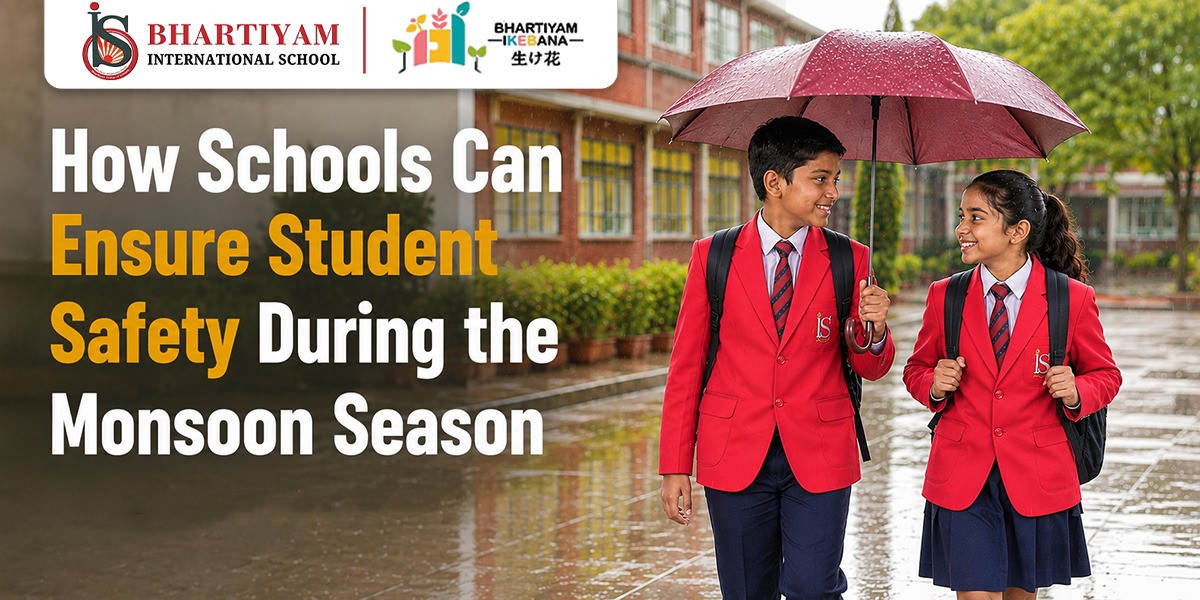
While the monsoon season is welcome relief from the summer heat, it also poses a unique set of challenges for schools to actively plan for. During these months, the roads are flooded, surfaces are slippery, the electrical hazards are increased, and seasonal illnesses are heightened. It is impractical to reactively manage student safety during monsoon. It takes preparation in advance of the rains and practice during the rains.
Institutions known for strong student welfare practices, including the best school in Rudrapur, treat monsoon safety as a structured annual exercise rather than an afterthought, with infrastructure audits, written protocols, and active monitoring throughout the season rather than only after an incident occurs.
Campus Infrastructure: The First Line of Defence
Drainage and Waterlogging Prevention
Prior to the onset of monsoon, the school must carry out an inspection and cleaning program of all drainage, gutters and water outlets throughout the school campus. One of the top causes of waterlogging in school grounds is blocked drains, these pose a risk to safety and provide breeding conditions for mosquitoes.
Electrical Safety Checks
Wiring, switch boards and any electrical points throughout campus that are exposed or susceptible to water should be thoroughly inspected. All outdoor electrical fittings should be well-insulated and damaged wires that can be seen should be replaced immediately. This is one of the most overlooked but most serious aspects of best school safety practices in monsoon.
Flooring and Walkways
Areas of frequent foot traffic, such as entries, corridors and stairways, should have anti-skid flooring or matting. Wet floor signage is especially important for reducing fall injuries during this time of year in most schools, as injuries from falling do increase.
Monsoon Safety Tips for Schools: Daily Operational Practices
These monsoon safety tips for schools should become routine practice across the season:
- Morning safety checks: Safety checks conducted in the morning each day for water in playground areas & corridors.
- Restricted outdoor activity during heavy rain: Cancel outdoor activities and/or move assemblies into the building when heavy rain or lightning is occurring.
- Regular pest and mosquito control: Remove any standing water around campus on a regular weekly basis during the season.
- Hygiene reinforcement: Ensure that soap and clean water is available at handwashing stations and is kept in place on a daily basis.
Student Health and Safety in Monsoon
Student health and safety in monsoon requires specific attention to illnesses that spike during this period:
- Vector-borne diseases: Increase in Dengue, Malaria and Chikungunya cases. Schedule fogging and mosquito control with local health officials.
- Waterborne illnesses: Make sure that sources of drinking water are filtered and tested regularly.
- Respiratory infections: Sudden changes in temperature make students cold. Have parents keep ill children home.
There should be a clear plan for isolating and sending home any student who exhibits signs and symptoms of a contagious illness to school.
Transport and Commute Safety
A significant portion of monsoon-related risk occurs during the commute, not on campus. Rainy season safety for students must extend to this part of the day as well.
School transport vehicles should be checked for working wipers, headlights and tyres prior to the start of the school year. Monsoon driving rules should be briefed to drivers, including driving at lower speeds on waterlogged roads. The school should have a clear system of communication with parents, so that they can be notified in time if there is a change in the school schedule because of bad weather-this could be SMS alerts or a parent app.
Monsoon Season School Safety Checklist
Before monsoon begins:
- Clear all drains and water outlets across campus
- Conduct a full electrical safety audit
- Install anti-skid flooring in high-risk areas
- Service all school transport vehicles
- Stock the medical room with monsoon-specific supplies
- Brief staff and drivers on seasonal protocols
During the season:
- Conduct daily morning safety inspections
- Eliminate standing water weekly
- Monitor student health and maintain illness protocols
- Move outdoor activities indoors during heavy rain or lightning
- Keep communication channels with parents active and tested
What Parents Should Know
Student protection during the rainy season is a shared responsibility between schools and families. Parents can assist by sending children to school with suitable rain equipment, changing their child’s wet clothes as soon as they get home, keeping an eye on whether they are feeling ill and not sending them to school when they are not, and being responsive to what the school communicates during severe weather.
Final Word
Student safety during monsoon is not just a single check off. It’s a commitment for the season, from infrastructure, day-to-day, health monitoring, transport safety and emergency preparedness. Schools that have planned in advance for the rains and who take the time to be extra vigilant during the rains are better able to protect their students than those that are only doing their normal response procedures.
Frequently Asked Questions (FAQs)
What to do to ensure student safety during monsoon in school?
School should do a pre-monsoon audit of infrastructure including drainage and electrical safety, provide anti-skid floor coverings, service transport vehicles and carry out daily safety checks during the monsoon period to ensure regular safety for students whilst at school during monsoon.
What are the key messages or safety tips for schools on monsoon safety?
Schools can take certain measures to be safe during the monsoon season, such as clearing any drains before the monsoon begins, eliminating any standing water every week, moving outdoor activities indoors when rain or lightning is heavy, and communicating with parents well.
What are the ways to handle student health during the monsoons in school?
Effective monitoring for vector-borne and water borne diseases, provision of potable water and a plan for the isolation of students with symptoms of communicable diseases are required for student health and safety during the monsoon.
What items are necessary to have in a School Safety checklist for a monsoon season?
Some of the items that are part of a complete monsoon season school safety checklist are drain clearance, electrical inspection and anti-skid flooring, transport vehicle servicing, medical room stocking and parent communication systems.
What are the ways parents can be helpful in protecting School safety during heavy rainfall ?
During the rainy season parents can support students’ protection by providing the necessary rain gear, encouraging children to change out of wet clothes as soon as possible, ensuring children stay home if they are ill or in need of medical attention, and being available to school communications when the weather is bad.