Across India, parents prefer to find a school offering an international curriculum to enroll their children in and prepare them for a globally connected world with knowledge as well as skill development. One relevant example of such a highly followed curriculum is the Cambridge Early Years Programme, focusing not only on academic knowledge but also on the development of life skills such as communication, analytical thinking, adaptability, etc. To help in the development of these skills, schools followed approaches such as inquiry-based learning, project work, discussions, and cross-cultural interaction.
What Are the Skills Gained from International Education?
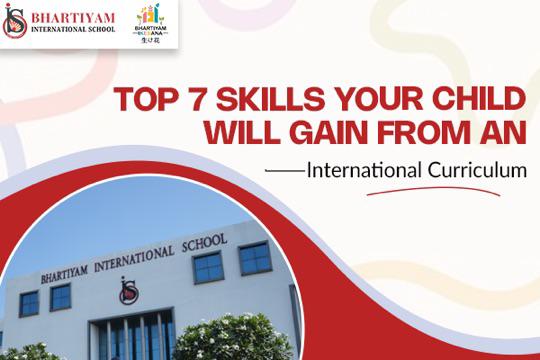
A globally followed education system like that of Cambridge, whose demand has grown by over 40% in India in the last 5 years, is designed to promote holistic development among students. It does not focus solely on rote memorization of concepts but encourages students to understand them and use their knowledge in practical situations. When your child gets to study at one of the top international schools in Uttarakhand, the following are seven important skills developed in them:
1. Leadership and Collaboration
In international schools that follow a curriculum like that of Cambridge, students participate in group-based activities that are completed through planning, discussion, and shared responsibility. This process encourages children to learn how to lead when necessary and cooperate when others take the lead. They learn about:
- Understanding team roles and responsibilities
- Respecting diverse perspectives and ideas
- Managing group tasks and timelines
- Practicing negotiation and constructive feedback
2. Creativity
Creativity is one of the most critical skills in the present-day education and professional environment, which an international curriculum gives importance to. At schools, teachers give rise to creativity in students through experimentation, brainstorming, and open-ended assignments. These include:
- Project-based learning and design challenges
- Art, music, and interdisciplinary activities
- Innovative problem-solving exercises
- Research projects that require original interpretation
3. Multilingual Communication
Among the most important skills gained from international education is multilingualism, which allows children to interact smoothly with peers from different linguistic and cultural backgrounds. Some ways in which multilingual communication abilities help students include:
- Strong spoken and written language abilities
- Basic understanding of multiple languages
- Having cultural sensitivity in conversations
4. Critical Thinking
The major Cambridge curriculum benefits for children include the course offering the knowledge of analyzing information, questioning assumptions, and evaluating evidence, all of which build their critical thinking and help them assess complex information. The many practices followed to build their critical thinking include:
- Case studies and scenario-based learning
- Data analysis and interpretation
- Debates and discussion-based lessons
- Research assignments requiring evidence-based arguments
5. Public Speaking and Confidence
At a school, children get to participate in presentations, debates, and classroom discussions, which act as opportunities for them to speak in front of a crowd. Over time, participation in these activities improves their public speaking skills and confidence. The common activities that build public speaking confidence include:
- Group debates
- Discussions with other students regarding any topic
- Participation in assemblies
6. Social Development
The many approaches taken in how Cambridge Early Years helps child development include their social development. It is a child’s ability to interact effectively with others, regardless of whether they are junior, senior, or the same age as them. The key aspects of social development that should be taught to students include:
- Respect for cultural diversity
- Better interpersonal communication
- Cooperative behavior in group settings
- Openness to different worldviews
7. Emotional Development
At an international school, teachers give the students the opportunity to participate in reflection activities, mentorship programs, and supportive classroom environments, all of which lead to their emotional learning and awareness. Children may develop emotional intelligence through:
- Reflective journaling and self-assessment
- Conflict resolution exercises
- Peer collaboration and support
- Mindfulness or well-being activities
What Are the Cambridge Curriculum Benefits for Children?
The curriculum of the Cambridge Early Years Programme follows a structured approach that promotes critical skills needed for higher education and future careers among students and hones their academics at the same time. It includes using inquiry-driven teaching methods, encouraging students to ask questions, investigate ideas, and apply learning to real-world situations. The following are some Cambridge curriculum benefits for them.
- Conceptual Learning – Encourages understanding rather than memorization
- Global Recognition – Curriculum accepted by colleges and universities worldwide
- Holistic Development – Focuses on skill building and academics
Conclusion
The aim of an international curriculum like that of Cambridge is to develop well-rounded learners by combining academic learning with practical life skills. These skills include leadership abilities, creativity, communication skills, analytical thinking, confidence, social awareness, and emotional intelligence.
Enroll your child at Bhartiyam International School and make them experience the many benefits of the Cambridge Early Years Programme.
FAQs
Q. What is the most important role of the curriculum?
The most important role of a curriculum is to give a structured education plan to students, make the outcomes of education their successful future, and ensure their holistic development.
Q. Is Cambridge curriculum accepted in India?
Yes, the Cambridge curriculum is widely recognized and accepted in India, along with several other countries globally, which defines its global reputation.
Q. What is special about Cambridge’s curriculum?
The holistic development approach followed in Cambridge’s curriculum includes the development of critical thinking, analytical skills, problem-solving abilities, and many other such critical skills, along with a focus on academics, which makes it special.